
2b: A Human Embryo Is an Individual Organism
In the past century, science has made it increasingly clear that a
zygote—the product of fertilization—contains within itself the
“organizing principle of the full development”1 of its species that
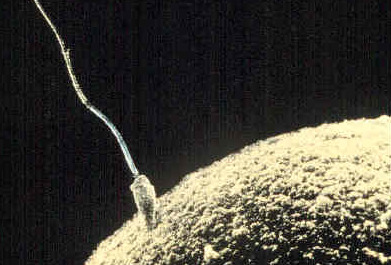 is the hallmark of organismal being. As we work backwards in
time from human adulthood, there is an uninterrupted
progression of development that extends all the way to
fertilization. This event stands out not just as being a
developmental landmark but as actually ushering in an entirely
new developmental trajectory. It’s the moment when a new
genome is formed, empowered to dictate the assembly of an
eventual adult, and actually begins directing that assembly. The
genetic blueprint and other intracellular factors with which the
zygote is endowed coordinate the growth of that cell from the
very beginning; even the first cell division is asymmetric and
ordered toward the unfolding plan of development encoded
within the embryo. By contrast, all other milestones—implantation,
birth, and so on—are merely landmarks in a pre-existing developmental
trajectory.2
is the hallmark of organismal being. As we work backwards in
time from human adulthood, there is an uninterrupted
progression of development that extends all the way to
fertilization. This event stands out not just as being a
developmental landmark but as actually ushering in an entirely
new developmental trajectory. It’s the moment when a new
genome is formed, empowered to dictate the assembly of an
eventual adult, and actually begins directing that assembly. The
genetic blueprint and other intracellular factors with which the
zygote is endowed coordinate the growth of that cell from the
very beginning; even the first cell division is asymmetric and
ordered toward the unfolding plan of development encoded
within the embryo. By contrast, all other milestones—implantation,
birth, and so on—are merely landmarks in a pre-existing developmental
trajectory.2
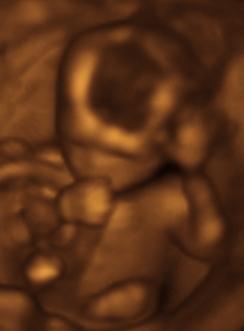
Countless pro-life and popular-science publications recount the awe-inspiring details of embryonic development. Over the course of about six weeks, the human embryo achieves the remarkable feat of self-assembling hundreds of unique body parts, such that by the time most elective abortions take pace the little human possesses the full adult suite of internal organs. This accomplishment is mind-boggling in its complexity and yet profoundly elegant in its silent execution. A mere three weeks after conception, long before any surgical abortions are performed, the embryo’s heart is beating and pumping blood. A short time later, the face has formed and the brain is controlling muscular movement. If you can imagine multiplying in size ten thousand times within the space of a month, you might have a sense for the feverish activity permeating the early embryo.
Especially when accompanied by full-color intrauterine photographs that modern technology makes possible, these facts powerfully drive home the humanity and vitality of the unborn. We encourage pro-life activists to familiarize themselves with this research (see Resources). While emotionally compelling, however, the specifics are tangential to the core argument, and we are not going to repeat them here. Whether the fingers form on this day or that is secondary to the larger point—that those fingers belong to an organism, an organism who pre-existed and who herself produced her own body parts.
-
The quotation is from “Framing the Future: Embryonic Stem Cells, Ethics and the Emerging Era of Developmental Biology.” Pediatr Res 2006;59(4 pt 2):4R-12R. ↩
-
Discussion Tip
There are a few tricks for making the point that an human embryo is an individual organism; see Discussion Tactics. ↩