
2a: Detectable Brainwaves
Brainwaves1 make for an interesting candidate criterion, inasmuch as the current clinical and legal definition of death—the end of personhood—is the cessation of detectable brainwaves. The logic goes something like this: if we define the ending boundary of personhood as death, and we define death as the loss of brainwaves, then possessing brainwaves must be a necessary condition for personhood; indeed, we are implicitly defining a person as a human organism with brainwaves. Tying brainwaves to the broader criterion of sentience, we see why this might make sense, at least superficially: brainwaves indicate the presence of cerebral activity, and cerebral activity is necessary for cognition, which, some argue, is necessary for personhood. If we accept this reasoning, then personhood would begin when the human organism first exhibits brainwaves, around six weeks after fertilization.

This logic is based on a misunderstanding of the clinical and legal definition of death. Organismal death is properly understood as the irreversible loss of the being’s internal self-integration. This “self-integration” is what makes an organism a whole rather than a collection of parts. As soon as an organism stops acting as a self-integrating entity, it has stopped acting as an organism at all and ceases to be one. Pro-lifers agree that death is the ending boundary of personhood, because at that moment the entity transitions from being a human organism to being a human corpse. In other words, the entity no longer meets the minimum conditions for personhood—human and organism.
Conceptually, the distinction between declining organism and disintegrating corpse is clear enough, but how to measure exactly when that transition has taken place has changed as the understanding of biology has developed. Centuries ago, the cessation of heartbeat was the clinical measure used to establish when death had taken place. As technology and scientific knowledge increased, it became clear that cessation of brainwaves correlated much more precisely with this final loss of organismal integration in postnatal humans. While not uncontroversial, cessation of brainwaves is currently the best generally accepted correlate of death that is clinically measurable. Cessation of brainwaves is not death any more than cessation of heartbeat was death, but it is something measurable that happens at about the same time as death. Therefore, because it is difficult to measure death directly, brainwaves are used as a legal benchmark to say that death has taken place. All the while, the philosophical understanding on which the legal definition is based has remained unchanged.
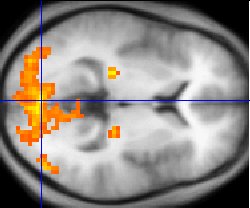
Given that cessation of brainwaves is not death but only a measurable proxy for death, the current legal definition of death does not imply that possession of brainwaves is a necessary condition for personhood. Rather, being an organism is a necessary condition for personhood, and this is why death—the cessation of being an organism—is the ending boundary. The analogous beginning boundary, then, is not when the entity first exhibits brainwaves but rather when the entity first becomes an organism. There is a profound difference between a living human organism with brainwaves and a disintegrating corpse without brainwaves. There is, however, no such profound difference between a living human fetus without brainwaves and a living human fetus with brainwaves.
Thus, the case for brainwaves by analogy with death fails. The pro-choicer could still fall back on the argument that sentience is really the key criterion, with initiation of brainwaves serving as the critical threshold that makes sentience a binary variable.
This argument is difficult to defend, however. While we have no good standard for measuring consciousness or determining when a morally meaningful level of consciousness has been attained, we can safely say that a six-week-old fetus is in no sense sentient, despite exhibiting brainwaves. While brainwaves are a necessary precursor for sentience, so are neurons, which start developing much earlier. In short, the initiation of brainwaves does not mark a transition in sentience at all, and there is no reason to claim that initiation of brainwaves marks a transition in cognition or even the ability for future consciousness that is any more significant than a multitude of other developmental landmarks. As a result, it is an arbitrary and inadequate threshold.
-
Discussion Tip
Defending Premise 2a is a component of Discussion Task 2. ↩