
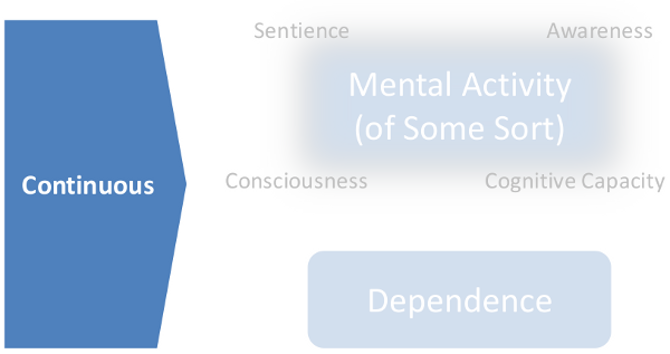
2a: Continuous Properties
If personhood1 is directly tied to a continuous property, personhood itself would be a continuum. In other words, personhood would vary by degrees. Some persons would possess more intrinsic value than others, and the concept “3/5 of a person” would make sense. The extent to which one is intrinsically valuable would fluctuate throughout one’s life, and different people would have different amounts of intrinsic value in accordance with their respective share of the relevant property. This flies in the face of our experience with born persons, all of whom are accorded equal human dignity and basic human rights. Regardless of age, intelligence, income, homeland, and so on, we all have intrinsic value.
It is important to note that we are not speaking of extrinsic or emotional value. Our mothers have more emotional value to us than a complete stranger. Similarly, a brilliant scientist working on a cure for cancer might be more extrinsically valuable to society than a homeless or mentally disabled person. But all have the same basic, inviolable human rights—which, broadly speaking, boil down to the right to be treated as ends and never simply as means.
We also do not mean that society recognizes all persons as having
the same entitlements, broadly defined. Obviously, a fourteen-year-old
is denied the “right” to drive a car or drink alcohol. But
 just because she has not acceded to the full suite of adult
privileges and responsibilities does not mean that she is only 3/4
of a person. These reasonable restrictions on her liberty in no
way compromise her basic human dignity vis-à-vis that of an
adult. This is why she may never be targeted for destruction,
the way a fetus is in an abortion. The right not to be murdered,
after all, could in no sense be called an adult privilege. Rather, it
is a fundamental consequence of having moral dignity to begin
with, and this intrinsic dignity (as opposed to extrinsic value)
does not seem to vary by degrees, at least among born persons.
just because she has not acceded to the full suite of adult
privileges and responsibilities does not mean that she is only 3/4
of a person. These reasonable restrictions on her liberty in no
way compromise her basic human dignity vis-à-vis that of an
adult. This is why she may never be targeted for destruction,
the way a fetus is in an abortion. The right not to be murdered,
after all, could in no sense be called an adult privilege. Rather, it
is a fundamental consequence of having moral dignity to begin
with, and this intrinsic dignity (as opposed to extrinsic value)
does not seem to vary by degrees, at least among born persons.
To be fair, most advocates of the personhood-as-continuum position recognize that born persons are of more or less equal intrinsic value. Rather, they seem to envision the continuum operating over a relatively brief (generally pre-natal) period of time, by the end of which the entity attains essentially full dignity.
The difficulty is that all continuous properties that one might
claim to be integral to personhood continue to vary by degrees
long after birth. This is certainly true of dependence as well as
any kind of mental activity. Indeed, for almost any continuous
property on which one might predicate personhood, a newborn
 infant possesses far less of that property than an adult. For
most of them, a mentally disabled human possesses far less
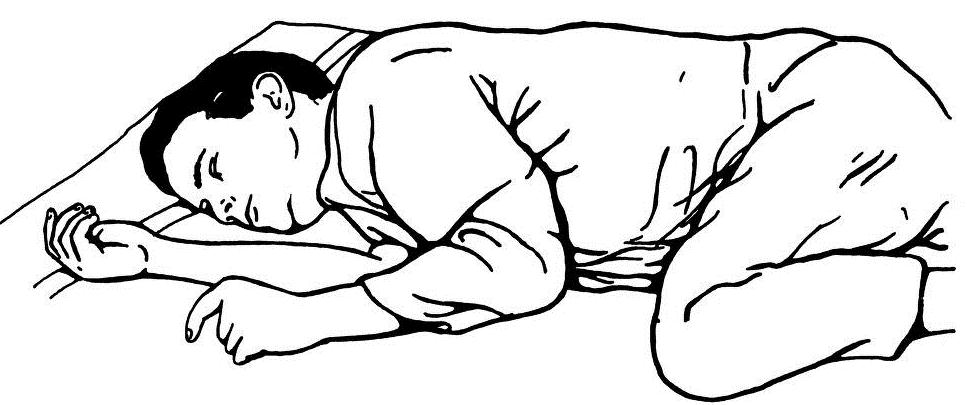
than a healthy one. And, for some of them, a sleeping or
anesthetized individual possesses none at all. Since newborns,
surgery patients, and disabled individuals in fact have no less
intrinsic value than healthy, awake adults, personhood must not
correlate directly with any of these properties.
infant possesses far less of that property than an adult. For
most of them, a mentally disabled human possesses far less
than a healthy one. And, for some of them, a sleeping or
anesthetized individual possesses none at all. Since newborns,
surgery patients, and disabled individuals in fact have no less
intrinsic value than healthy, awake adults, personhood must not
correlate directly with any of these properties.
-
Discussion Tip
Defending Premise 2a is a component of Discussion Task 2. ↩