
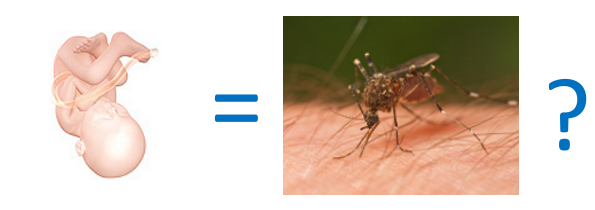
The Parasite Objection
The most difficult challenges to Premise 1 are those that construe an unplanned pregnancy as a case of parasitism, which no one should be forced by law to support. There are some subtle analogies that are marshaled in defense of this idea, but even the common catchphrases about bodily autonomy are often unsophisticated attempts to get at the same concepts. There is much that can be said depending on the form that these arguments take, but a common theme applies:

When we say that a fetus has a right to life, we mean that he has a right to the baseline level of care necessary for ordinary survival.
This is not unreasonable, since we define the right to life of a newborn in the exact same way. Not only actively stabbing but also fatally neglecting an infant is a crime. This is the reason that, during an abortion, the fetus must be ripped or burned to death before being removed from the womb—otherwise, the doctor would be required by law to provide basic medical care to the now-born infant.
Far from representing an injustice, this expectation is the hallmark of a morally progressive society that values and protects its weakest members.
The infant is treated this way because he is a person. If a fetus is also a person, then he should receive similar protection. Like the infant, he should be accorded the baseline level of care necessary for ordinary survival. It follows that he would have the right to remain in his mother’s womb until viability, even if she does not want him there.1
A more thorough philosophical defense of the pro-life position on this point can be mounted in response to specific “parasite” objections, which are addressed in the Sample Q & A module.
-
Discussion Tip
For more on this topic, see the following responses in Sample Q & A. Fortunately, you probably won’t have to address these issues unless you are speaking with a particularly well-informed pro-choicer. ↩